
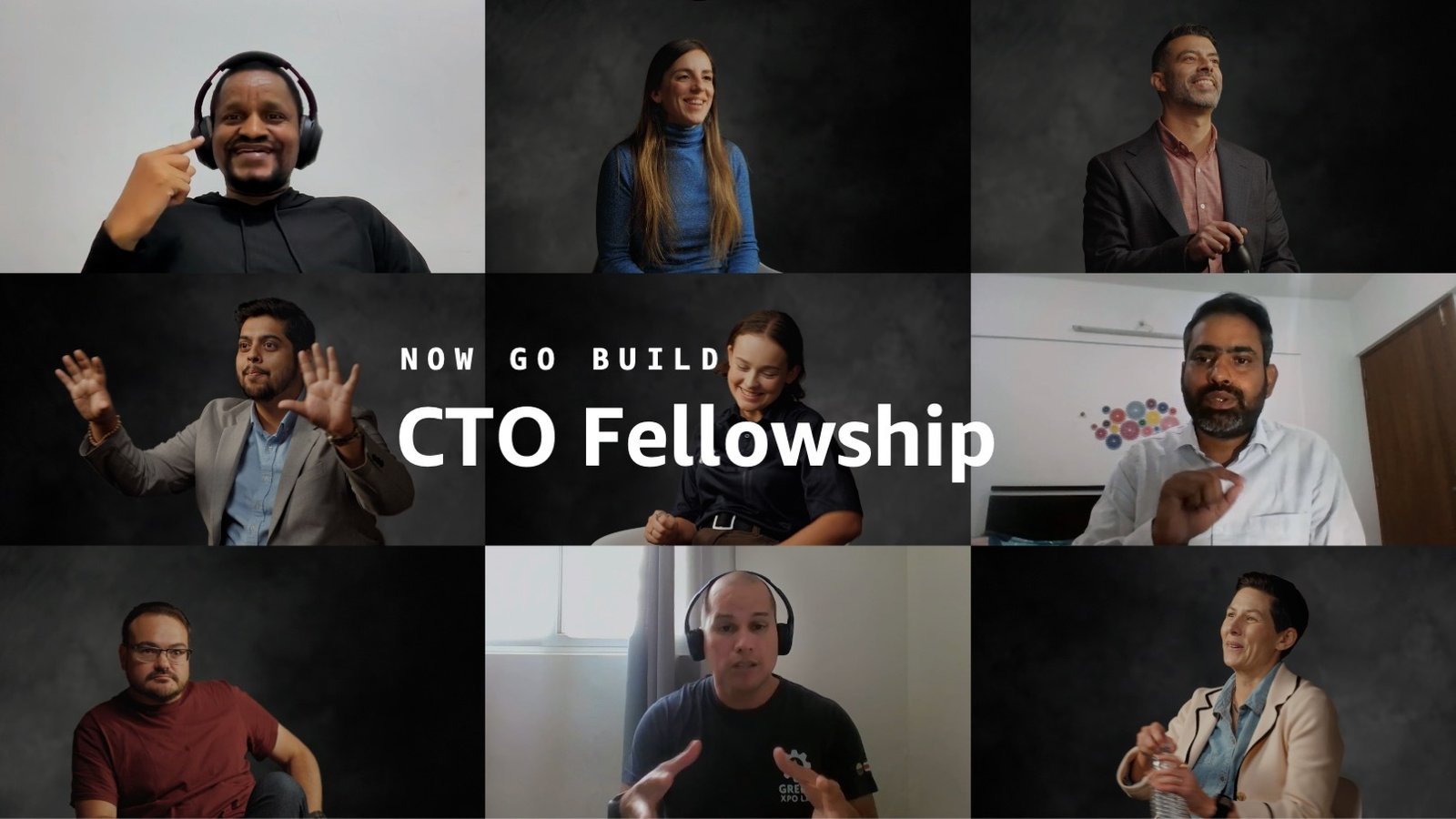

It’s been a few years since the last season of Now Go Build. This time we take a slightly different approach. Instead of startups, we’re focusing on the inaugural CTO Fellows Now Go Build class. Nine technology leaders from social impact organizations solving some of humanity’s toughest problems.
They are builders working in disaster zones, climate affected regions and underserved communities around the world. You prove every day that when you give smart people access to good data, the right tools, and domain expertise, they can use technology to make an extraordinary impact.
Today we’re releasing the first episode of a five-part series featuring each of the Fellows and the work they do. The remaining episodes will be published in the coming weeks and will focus on crisis mapping, AI and open data, food security and community empowerment. All episodes will be available on All Things Distributed and YouTube.
Let it be a call to action. If you are a builder, you need your skills. If you are an organization working on global challenges, there are tools to amplify your impact. Together, let’s put technology into the hands of those who need it most.
Now get building!
Episode 1: Meet the Fellows
Meet CTO Fellows working in disaster management and climate resilience, each bringing a unique perspective on how technology can address humanity’s most pressing needs. From crisis zones to community centers, these builders show what’s possible when you combine technical expertise with a deep understanding of humanitarian challenges.
Episode 2: Crisis Mapping
Many mapping services only map those parts of this world that are of commercial interest. Large parts of the world remain uncharted, which can mean the difference between life and death in times of crisis. Péta from the Humanitarian OpenStreetMap Team and Ola from Help.NGO are changing that.
Episode 3: AI and Open Data
Behind every humanitarian crisis are people who make split-second decisions with incomplete information. Alicia from Mercy Corps, Kuldeep from ACAPS and Fermín from CRIES give these decision makers the tools they need to see around corners. Using open data from satellites and remote sensors to social media posts, you can monitor, predict and take proactive action before a crisis occurs.
Episode 4: Food Security
The contradiction between food insecurity and food security is a solvable problem. There is enough food in the world to feed everyone, but it doesn’t always end up where it is most needed. Alicia from Mercy Corps, Ameesh from 412 Food Rescue and Ola from Help.NGO discuss local and global solutions to help prevent food insecurity and the need for a collaborative approach.
Episode 5: Strengthening Communities
Global challenges require local solutions. Carlos from the Green Xpo Lab, Clemence from Code for Africa and Vijay from the Watershed Organization Trust understand this. The three fellows use remote sensing, artificial intelligence and data analytics to drive change in civic, agricultural and environmental contexts – with communities, not just for communities.